


Data-First Architecture: How to Build Robust, Scalable Enterprise Applications
November 6, 2026
Supplier Fragmentation: The Invisible Leak Undermining Profitability
November 6, 2026Claims Settlement: From an Overloaded Inbox to Resolution in Minutes
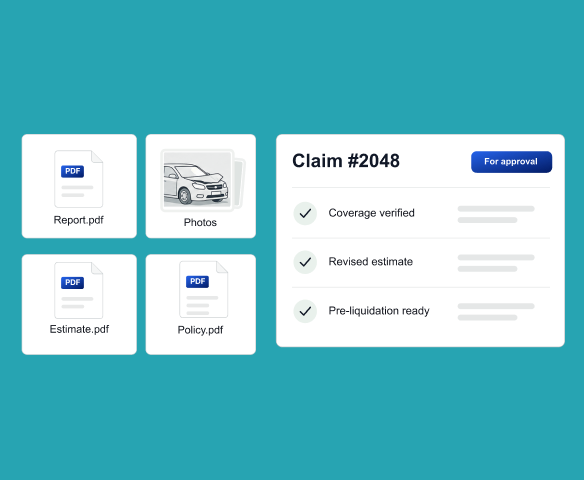
A policyholder’s experience when reporting a claim is often the critical moment that determines whether they stay with the company. Yet for claims operations and settlement teams, every incoming claim means a marathon of manual tasks: downloading PDF attachments, comparing damage photos with repair shop estimates, checking coverage in the core system, and cross-referencing data in spreadsheets.
The problem is not a lack of digitization in intake channels; it is the interpretation bottleneck. Information still arrives unstructured, and substantive assessments continue to depend on people’s ability to read, compare, and process each claim file one by one.
To scale operations without multiplying fixed costs or overloading analysts, the industry needs to move from simple digital intake to cognitive claim resolution.
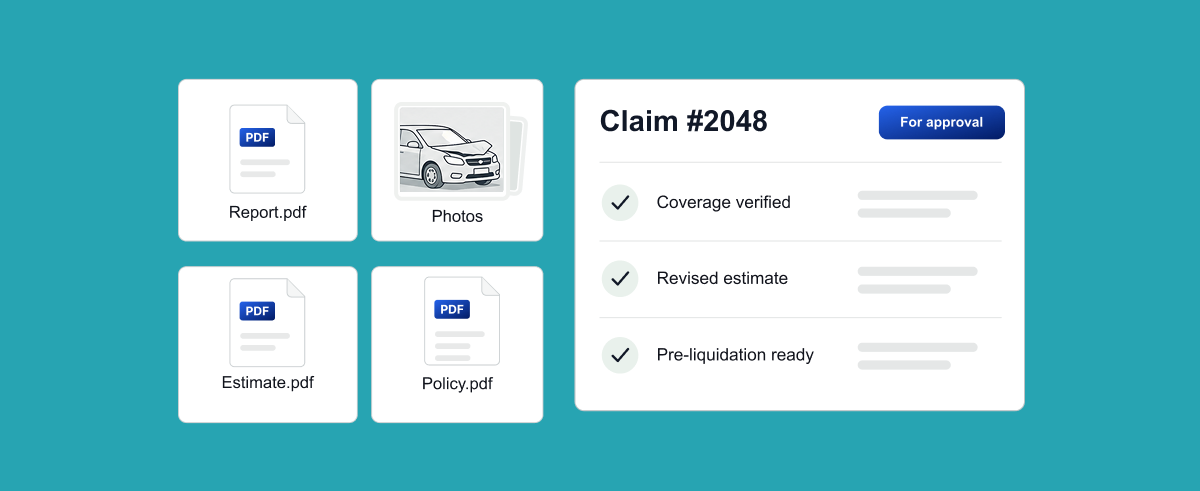
From document to payment: The journey of an agentic claim file
Implementing agentic AI in the claims workflow is not about replacing the claims adjuster’s judgment; it is about freeing them from the heavy operational workload. AI agents do more than extract data from unstructured documents. They reason contextually about the information they receive, evaluate business rules, compare estimates against reference tables, and generate pre-settlement proposals ready for review.
In a workflow optimized for high-volume claims, such as auto or homeowners’ claims, the journey of a claim file changes dramatically:
- Instant multimodal intake and interpretation: When photos of the incident, police reports, or estimates in PDF format are submitted, the technology analyzes their content in context. It does more than extract text: it assesses the severity of the damage, validates repair shop charges against the company’s reference cost tables, and detects inconsistencies between what was reported and what was documented.
- Pre-settlement and coverage verification: The system transparently checks the active policy in the core system, verifies deductibles, coverage limits, and payment status, and generates an estimated pre-settlement in seconds.
- Intelligent routing based on risk and claim amount:
- Fast Track (Direct Settlement): Lower-value claims that meet all validation criteria and fall below the configured risk threshold move automatically to payment order generation.
- Operational Assistant (Complex Cases): If the amount exceeds the authorization limit, the documentation contains discrepancies, or analytics identify unusual fraud patterns, the claim file is routed to a human claims adjuster.
The claims adjuster as a decision-maker, not a data-entry clerk
In this model, the role of the insurance professional evolves. Instead of spending 20 minutes reviewing paperwork and entering data into the transaction system for each claim, the adjuster receives a pre-analyzed claim file.
When opening the case, the specialist finds:
- A summary that puts the key facts in context.
- A breakdown of the documents analyzed, with the corresponding alerts.
- A proposed resolution ready to be approved, modified, or rejected with a single click.
This allows an analyst to move from handling about ten claim files a day to supervising dozens of settlements in the same amount of time, focusing their expertise only on cases that require professional judgment or negotiation.
Operational autonomy with strict financial controls
Delegating analytical capabilities to AI in claims management is viable only when rigorous governance frameworks are in place. Operational speed must not put the insurer’s capital or regulatory compliance at risk.
That is why AI does not act independently on accounts or the core system. Control lies with the automation platform that governs the workflow:
- Non-negotiable approval limits: The maximum amount for an automated settlement or an analyst’s approval is set by centralized business rules that the AI model cannot change.
- Full traceability: Every data extraction, agent inference, and validation is recorded in a centralized, protected audit log.
- Transactional isolation: AI evaluates and proposes; the platform validates role permissions, applies security policies, and executes the official transaction in the insurance core system.
Orchestration and AI in claims: Faster responses and lower costs per claim
Reducing the average time to resolution (TTR) from days to minutes does more than significantly improve policyholder satisfaction at their most vulnerable moment. It also allows insurers to absorb spikes in claims, such as those caused by major weather events, without overwhelming the team’s operational capacity.
Evolving claims management does not require rebuilding the technology infrastructure from scratch. The key is to orchestrate the end-to-end process through BPMN workflows, API integrations with the existing core system, and the analytical support of agentic AI. This allows information to flow seamlessly, documents to be interpreted instantly, and the human team to make strategic decisions with maximum speed and accuracy.
