



Claims Settlement: From an Overloaded Inbox to Resolution in Minutes
November 6, 2026
Agentic AI in Procurement: Autonomous Agents Reshape Supplier Management
November 6, 2026Supplier Fragmentation: The Invisible Leak Undermining Profitability
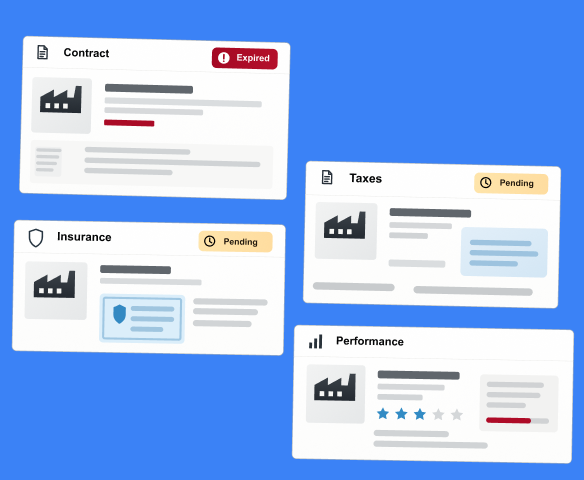
Some financial losses do not trigger alarms in committee meetings or bring operations to a halt overnight, yet they eat into profitability with every accounting cycle: fragmented supplier management. When contracts, supplier records, and approvals operate in silos, operating costs and risk levels rise before anyone notices.
According to an analysis by The Hackett Group, organizations that digitize and integrate supplier lifecycle management achieve up to 96% greater savings and operational efficiency than those using traditional methods. Despite this potential for optimization, fragmented processes across Latin America continue to affect financial results.
As a company expands its business units, opens new locations, or diversifies its service portfolio, its third-party network tends to become more complex. A model that began with centralized procurement often gives way to a web of disconnected spreadsheets, isolated email chains, expired insurance policies, and third parties providing services while their legal and tax documentation remains incomplete.
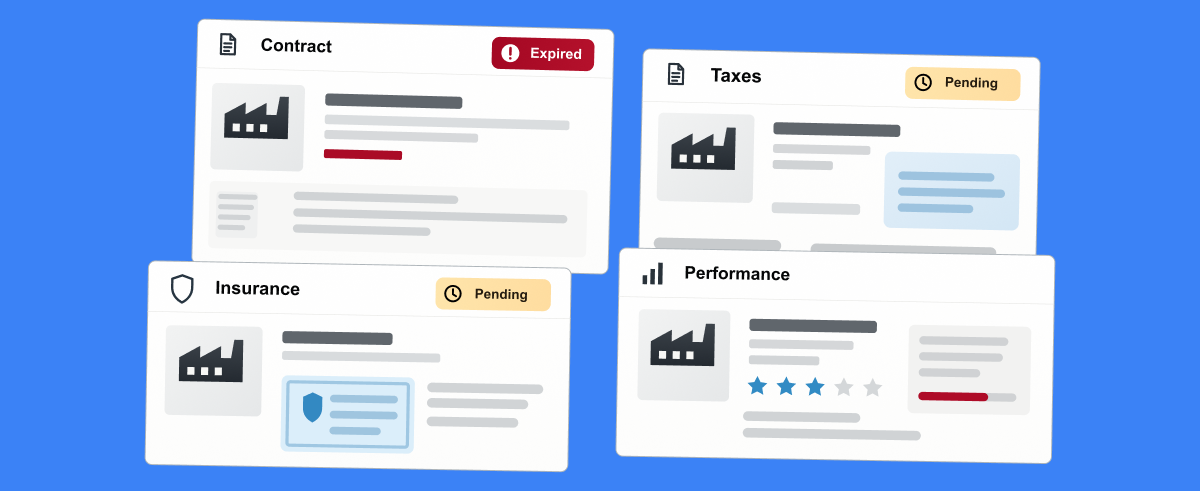
Where supplier lifecycle control breaks down
Non-compliance and cost overruns are not just negotiation problems; they stem from a fragmented view of the supplier. Financial costs often result from a lack of traceability across every stage of a third party’s lifecycle—from onboarding and qualification to evaluation and renewal—and from disconnected interactions among the areas involved.
1. Lifecycle fragmentation and disconnects between departments
When key supplier data is scattered across individual inboxes, local files, or systems that do not communicate with one another, supplier management loses continuity.
An onboarding or update process typically involves Procurement, Legal, Compliance, Finance, and the requesting department. Without a unified channel, these interactions become a maze of manual approvals and follow-up calls. The company loses visibility into the actual qualification status of its third parties, may not know whether a master agreement is still valid, and lacks auditable records of the supplier’s historical performance.
2. Exposure to legal, tax, and compliance risks
In its report on supply chain trends, Gartner states that more than 70% of operational disruptions, compliance failures, and reputational contingencies stem directly from a lack of supplier oversight.
Hiring a company with tax inconsistencies, expired insurance, or outdated certifications significantly increases the contracting company’s exposure. In increasingly stringent regulatory environments, an unqualified supplier or one with an outdated file can lead to financial penalties, licensing delays, or operational friction.
3. Administrative overload and operational friction
Informal channels often turn Procurement and support teams into an emergency response center. Manual tasks such as reviewing supplier files, validating banking details, tracking missing documents, or following up on contract renewals consume valuable time.
This leaves executives with less time to focus on the strategic management of the value network, renegotiating master agreements, or improving corporate governance.
"Suppliers should be managed as an extension of a company’s operational capacity. Without governance over them, business resilience is reduced to wishful thinking."
— McKinsey & Company (The Future of Procurement)
The cost of operating blind: Industry figures
To understand the financial impact of fragmented operating models, key metrics from global consulting firms reveal the friction caused by manual management:
of work time spent on manual tasks
According to Ardent Partners’ State of Procurement study, professionals and teams involved in third-party management at less digitally mature organizations spend more than a third of their workday searching emails, checking spreadsheets, and reconciling files manually.
Source: Ardent Partners, State of Procurement.reduction in processing time
The Hackett Group’s research on third-party oversight shows that automating supplier qualification and the collection of government and tax documentation significantly reduces administrative costs per file and shortens supplier onboarding time.
Source: The Hackett Group, research on third-party oversight.of commercial agreements go unreviewed
Gartner data indicates that a lack of traceability causes up to 25% of commercial agreements to expire or renew automatically without Procurement, Legal, or Compliance reviewing costs, risk, or performance beforehand.
Source: Gartner, data on agreement traceability and management.Pillars for orchestrating and governing the supplier lifecycle
Scaling operations while maintaining control means replacing a growing collection of disconnected tools with a unified operating ecosystem. Companies with strong governance do not replace their existing systems; they orchestrate workflows across departments and structure third-party relationships around four pillars:
- Qualification and a dynamic, unified supplier record: A real-time organizational repository that tracks tax status, technical capabilities, supporting documentation, and the complete history of every stage in the business relationship.
- Collaborative supplier self-service: Portals where suppliers can upload documents, update tax information, submit certifications, and track the status of their requests without overwhelming internal staff with inquiries.
- Cross-departmental approval orchestration: Seamless workflows where Procurement validates, Compliance assesses risk, Legal approves contracts, and Finance enables operational data—ensuring full traceability before a supplier operates in the ERP.
- Ongoing performance and risk assessment: Objective scorecards that measure delivery times, quality, regulatory compliance, and risk levels to classify the supplier base and support business relationships with clear metrics.
Quick assessment: How much control do you have over supplier management?
Before considering changes to your current processes, answer these three questions about your operations:
-
Can you check within minutes which active suppliers have an expired insurance policy, contract, or tax document?
-
Do your internal teams (Legal, Finance, Compliance, and Procurement) collaborate through a single digital workflow to onboard or audit a supplier?
-
If Audit or Compliance requests the complete file for a strategic supplier, is it centralized, up to date, and audit-ready in one place?
If you answered “No” to two or more questions, your company has optimization and efficiency opportunities that require priority attention.
Deyel Vendor Management: Centralized governance and orchestration of the supplier lifecycle
Ensuring visibility and compliance in third-party management does not require sacrificing operational agility or adding bureaucracy for your team.
Deyel Vendor Management is an enterprise solution that orchestrates the entire supplier lifecycle and connects all the departments involved, seamlessly integrating with your existing systems:
Lifecycle orchestration
Govern every stage of the supplier relationship—from onboarding, qualification, and contract submission to performance evaluation, risk management, and eventual offboarding or renewal.
AI agents integrated into the process
Bring Vendor Agent into your workflow, an AI agent that can take on operational tasks for your team.
It analyzes PDF contracts, checks whether certifications are current, extracts invoice data, and compares it against your business rules, escalating only exceptions or high-risk cases for human review.
Cross-functional coordination
Connect Procurement, Finance, Legal, Compliance, and requesting users through a cross-functional approval workflow, ensuring that only fully approved suppliers work with your organization.
Intelligent collaboration channel
Simplify supplier relationships with self-service portals and conversational assistants that answer common questions, streamline the submission of required documents, and prevent data inconsistencies.
Compliance and risk automation
Set up efficient approval workflows, automated tax validations, and early alerts for documents or contracts nearing expiration.
Native ERP integration
Deyel does not replace your ERP or management systems; it integrates with them. Deyel orchestrates preliminary validation and adds only suppliers that meet all corporate governance requirements to the ERP.
