


Modeling vs. Code: Strategies to Reduce Enterprise TCO
February 12, 2026
Technological Sovereignty: How to Avoid Vendor Lock-in in Mission-Critical Applications
February 12, 2026UX Enterprise: The Value of Data Density in Mission-Critical Systems
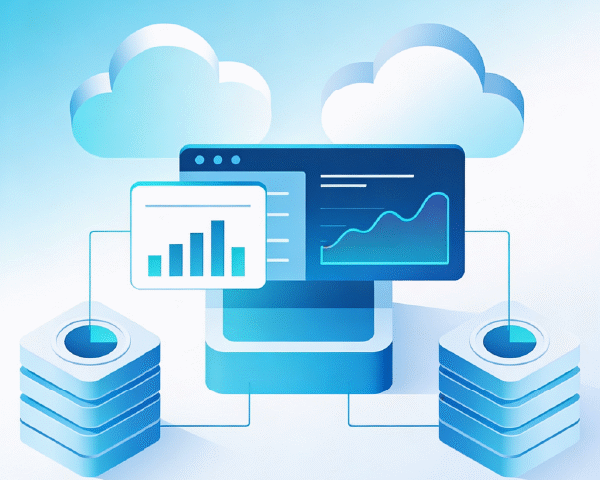
In corporate software design, there is a common trap: trying to apply the minimalism of mass-consumer mobile apps to the world of enterprise operations. While a social network seeks white space to retain attention, a logistics system or claims management platform requires the opposite: operational efficiency through data density.

“Data Density” as a driver of productivity
In mission-critical systems, the user is not an occasional visitor; they are a specialist who operates the tool intensively. Maximizing useful information per pixel enables decisions to be made by viewing the complete picture (grids, statuses, documents, and logs) in a single view, eliminating unnecessary scrolling and navigation fatigue.
This perspective aligns with market reality: according to a report by Nielsen Norman Group (a UX research and design firm), expert users in complex environments prefer dense interfaces because they allow them to develop “spatial memory,” locating critical data in microseconds without relying on drop-down menus that hide information.
Ant Design: The standard for high-complexity interfaces
To achieve density without creating visual chaos, it is essential to use robust design systems. While traditional development often relies on generic visual libraries, enterprise-class platforms bet on Ant Design.
This standard, designed specifically for B2B applications, offers components optimized to handle large volumes of records, with native capabilities for advanced filtering, multivariable sorting, and inline editing. By adopting an industrial standard, companies ensure:
- Operational consistency: Every module behaves the same way, reducing the learning curve.
- Performance: Components capable of rendering thousands of data cells without latency—vital for auditing processes or real-time monitoring.
From manual code to functional interface modeling
One of the greatest risks in traditional development is that the user interface (UI) is often “hard-wired” directly into the code. This means that any change in visualization requires opening the source code, generating ongoing maintenance costs.
Under a metadata-driven modeling approach, the interface is not programmed; it is assembled according to business rules. The platform interprets these models and automatically applies UX best practices and high-density components.
Designing for operational efficiency
True innovation in mission-critical software is not aesthetic—it is functional. Prioritizing data density and relying on proven standards such as Ant Design ensures tools built for real productivity and the reduction of operational errors.
Platforms like Deyel make this path easier by natively delivering high-performance, professional interfaces. This allows IT teams to stop worrying about “drawing” screens and focus on what truly adds value: optimizing business processes.
