


Vibe Coding: the strategic engine to maximize ROI and reduce TCO
December 29, 2025
Technological Sovereignty: How to Avoid Vendor Lock-in in Mission-Critical Applications
February 12, 2026Modeling vs. Code: Strategies to Reduce Enterprise TCO

In the race toward digitalization, many companies make the mistake of evaluating their software projects solely based on the initial development cost (Capex). However, the real test of profitability for a corporate solution is not just how much it costs to build, but how much it costs to keep it active, secure, and fully functional over the years. This is where the Total Cost of Ownership (TCO) comes into play.
The “Hidden Cost” of pure code
Metadata modeling: guaranteed stability and technological evolution
Strategic comparison
The smart investment
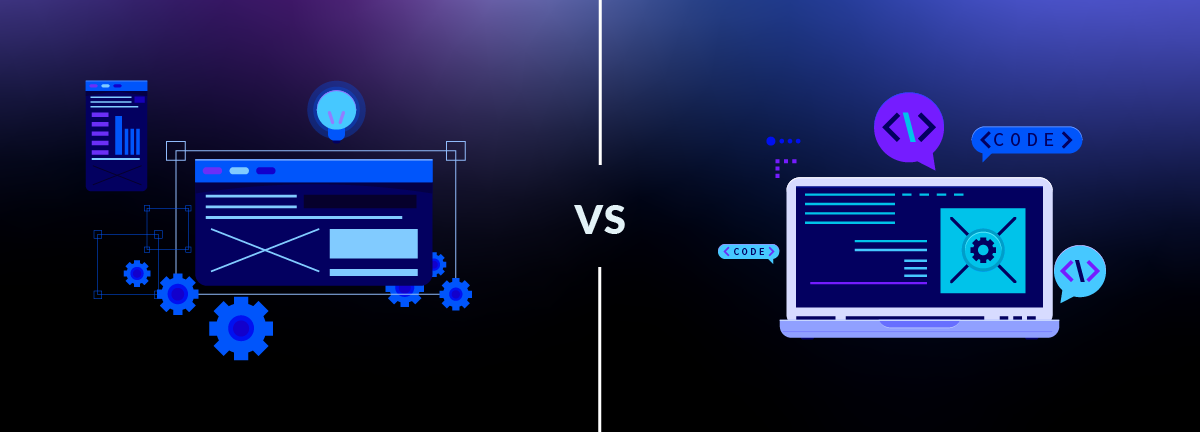
The “Hidden Cost” of pure code: the challenge of code-based AI
Tools based on automatic code generation have gained traction due to their ability to produce files (such as React or Tailwind) through AI in seconds. For a startup or a simple B2C application, this is a competitive advantage. But for a mission-critical application (such as a Claims Management System), pure code comes with a perpetual maintenance “tax”:
- Technical Debt: Every line of AI-generated code that is not manually reviewed becomes a potential future failure.
- Dependence on senior profiles: Maintaining thousands of lines of customized code requires expert developers who understand that specific architecture, increasing operational costs.
- Update cycles: Third-party libraries change constantly. Someone must pay the manual hours (staff) required to prevent the application from becoming obsolete or vulnerable to security patches.
According to data from IDC, the maintenance of legacy systems and technical support consumes, on average, up to 80% of the IT budget, leaving only 20% for real innovation. This financial imbalance is the direct consequence of architectures based on manual code that do not scale efficiently.
Metadata modeling: guaranteed stability and technological evolution
A robust architectural approach
Unlike tools that deliver loose “code files,” enterprise-grade platforms rely on a metadata-driven modeling approach. This means that the intelligence of the application resides in high-level models interpreted by the platform in real time. The result is an accelerated Time-to-Value: investment is translated into operational functionality without inheriting technical debt or the structural inconsistencies of manual development.
Core maintenance and transparent evolution
Under this model, the technical team focuses exclusively on business rules, while the platform absorbs technological evolution. Security, performance, and browser compatibility are kept up to date natively by the solution provider, eliminating the need for constant refactoring and enabling true scalability without proportionally increasing the technical staff.
Native consistency and data density
The use of industrial standards such as Ant Design allows these architectures to be optimized for interfaces with high data density. There is no need to “program” complex table behaviors or advanced filters from scratch; these are already built in, ensuring a professional and standardized user experience (Enterprise UX) that reduces training time.
Strategic comparison
| Concept | Code Development (Custom / AI Gen) |
Enterprise Platforms (Deyel) |
|---|---|---|
| Initial build | Fast with AI Enables faster development, but requires manual file review and post-adjustments. |
Agile and guided Built using AI assistants and visual modeling. |
| IT Governance | High risk Potential for Shadow IT and code fragmentation. |
Native and centralized Built-in governance, control, and auditing from the platform. |
| Annual maintenance | High Manual updates of libraries, patches, and dependencies. |
Low The platform evolves and maintains the technical layer. |
| Required profile | Senior / Full-Stack Developer High technical expertise and dependency on specialized resources. |
Functional Analyst / Solutions Architect Focus on processes, business rules, and architecture. |
The smart investment
Optimizing the technology budget is not about finding the lowest implementation cost today, but about ensuring that innovation is sustainable. By choosing an architecture that prioritizes IT Governance and modeling over manual coding, companies ensure that their budget works for the future of the business rather than rescuing systems from the past. In this scenario, platforms like Deyel enable organizations to capture these efficiencies by transforming maintenance spending into value-driven investment.
