


Insurance Core: Modernization with Low Code and Multi-Agent AI
November 28, 2025
Low Code + Multi-Agent AI: maintains control and delivers agility to the business
December 29, 2025The impact of Vibe Coding on the evolution of software
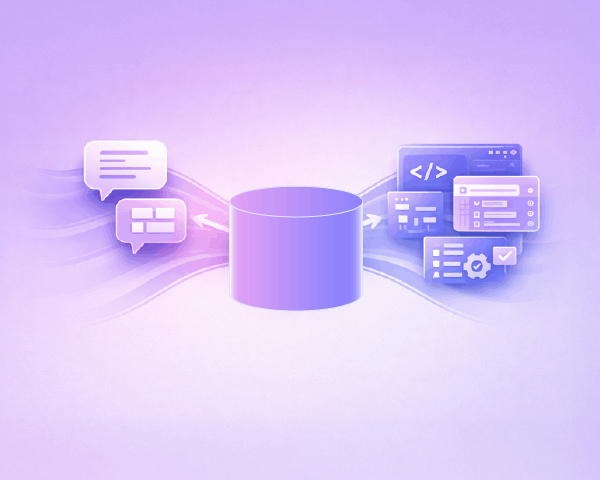
In today’s corporate ecosystem, the success of a digital initiative does not depend solely on the robustness of the code, but on how faithfully it translates the business vision. Traditionally, this process has suffered from a persistent information asymmetry: a gap between the needs expressed by the operational area and the technical interpretation of the development team.
Vibe Coding does not emerge as an isolated trend, but as a paradigm of convergence that resolves this friction through two fundamental pillars: real-time co-creation and structural adaptability.
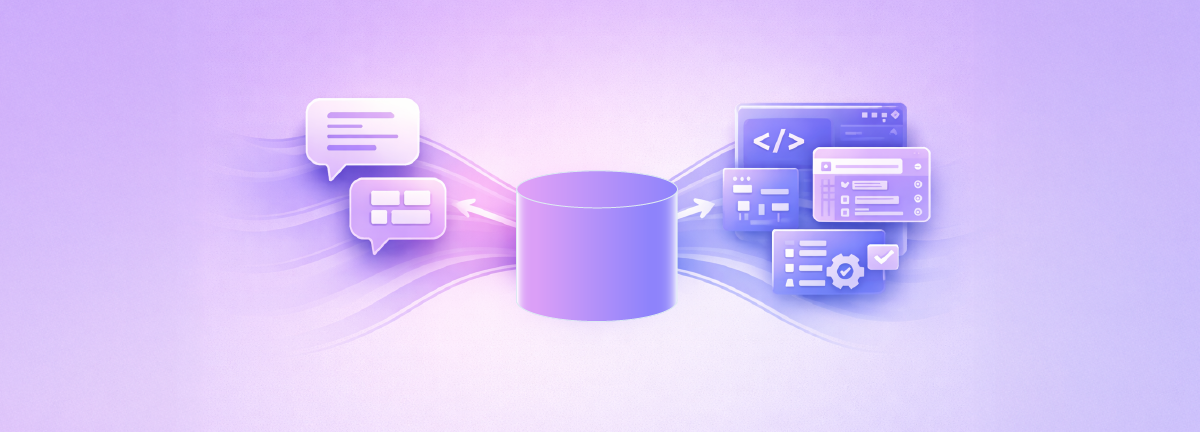
This convergence not only accelerates implementation, but also restructures collaboration, enabling the Business to prototype its vision, AI to actively assist IT, and final control to always remain in human expertise.
Eliminating asymmetry: Co-creation in Natural Language
One of the greatest hidden costs in IT is rework caused by misinterpreted requirements. The traditional cycle of lengthy specification documents often produces solutions that, by the time they are delivered, no longer reflect market reality.
With the Vibe Coding approach and Multi-Agent AI (such as DIANA), the design process is transformed into a shared understanding dialogue
- For the Business: It enables complex processes to be described in natural language and allows teams to immediately see how the platform generates functional models. Validation is instantaneous, eliminating the uncertainty of waiting months to see a prototype.
- For Technology: The IT team stops acting as an order taker and becomes the architect of the solution. By automating the base structure, technical talent can focus on governance and optimization, eliminating the “broken telephone” effect that erodes budgets.
This dynamic ensures an exceptionally short Time-to-Value, allowing ROI to begin materializing from the earliest stages of the project.
Fluidly adaptive software: Solving “Day 2” rigidity
There is a critical reality in the industry: most conventional software solutions begin to generate technical debt on the very day they are deployed. In traditional development, applications tend to be static structures; any change in business logic requires a complex intervention that exponentially increases the TCO (Total Cost of Ownership).
Vibe Coding proposes a model of organically evolving software. By integrating the speed of AI with the robustness of Low Code visual modelers, applications maintain constant flexibility:
- Market responsiveness: If regulations change or a new business opportunity arises, the application can be adjusted through a conversational instruction or a change in the graphical model.
- Long-term sustainability: Unlike rigid software that becomes obsolete due to its own complexity, this approach ensures maintainability as a native characteristic. The IT team can alternate between AI-driven agility for rapid updates and technical control for precision adjustments, ensuring the system always remains aligned with the current strategy.
Investment in operational agility
Vibe Coding redefines the relationship between technology budgets and business outcomes. It is no longer about funding closed, hard-to-modify projects, but about investing in an installed capability for rapid response.
By adopting this approach, organizations not only stop talent drain driven by technical frustration, but also eliminate the bottlenecks that hinder growth. It marks the transition from technology that merely “supports” the business to technology that actively drives it—reducing operational spend and maximizing competitiveness in an environment that does not tolerate delays.
